


Lifetime Warranty
60+5 uF MFD ±5% 370/440 VAC Dual Run Start Round Capacitor - Fits Condenser Straight Cool, Heat Pump
Save 13%
0.00
Regular price
$25.12
Regular price
$28.89
Sale price
$25.12
Fast delivery
CONFIRM THE FIT FOR YOUR MODEL
Enter your model number
60+5 MFD uF ±5% 370/440 Volt VAC Dual Run Start Round Capacitor
Key Features
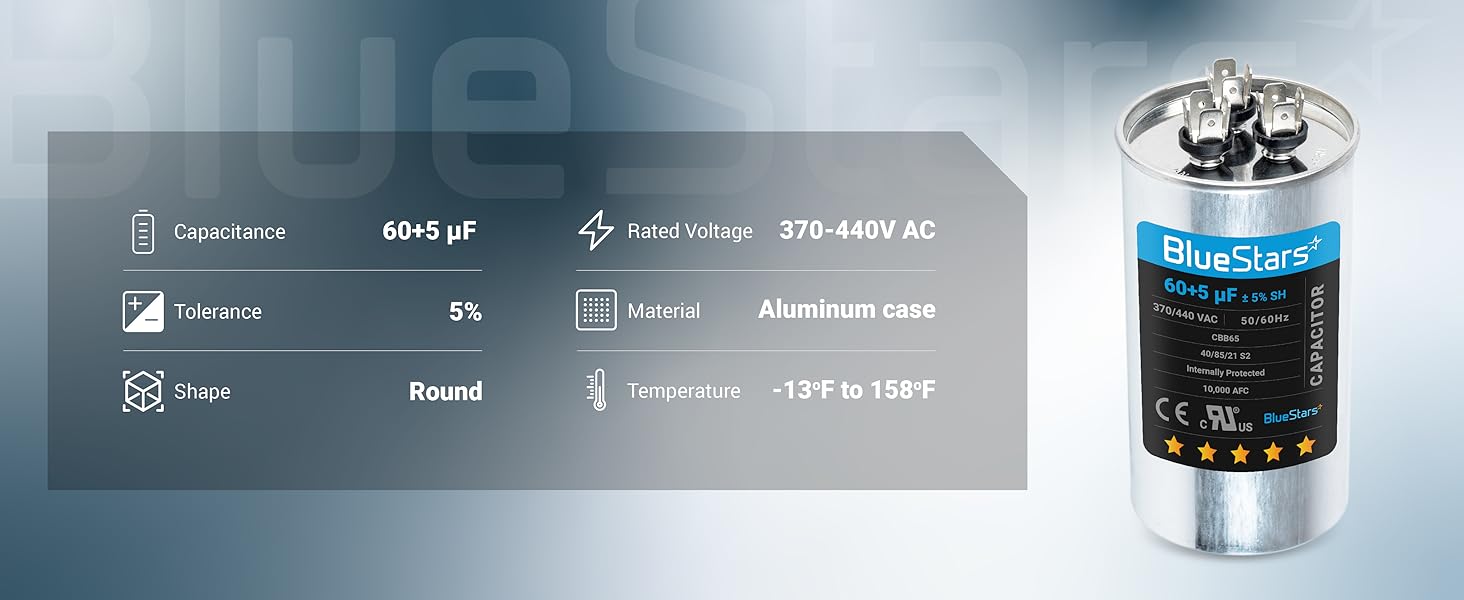
- Capacitance Rating: 60/5 Microfarad (MFD)
- Capacitance Tolerance: ±5%
- Voltage Rating: 370/440 Volts AC (VAC)
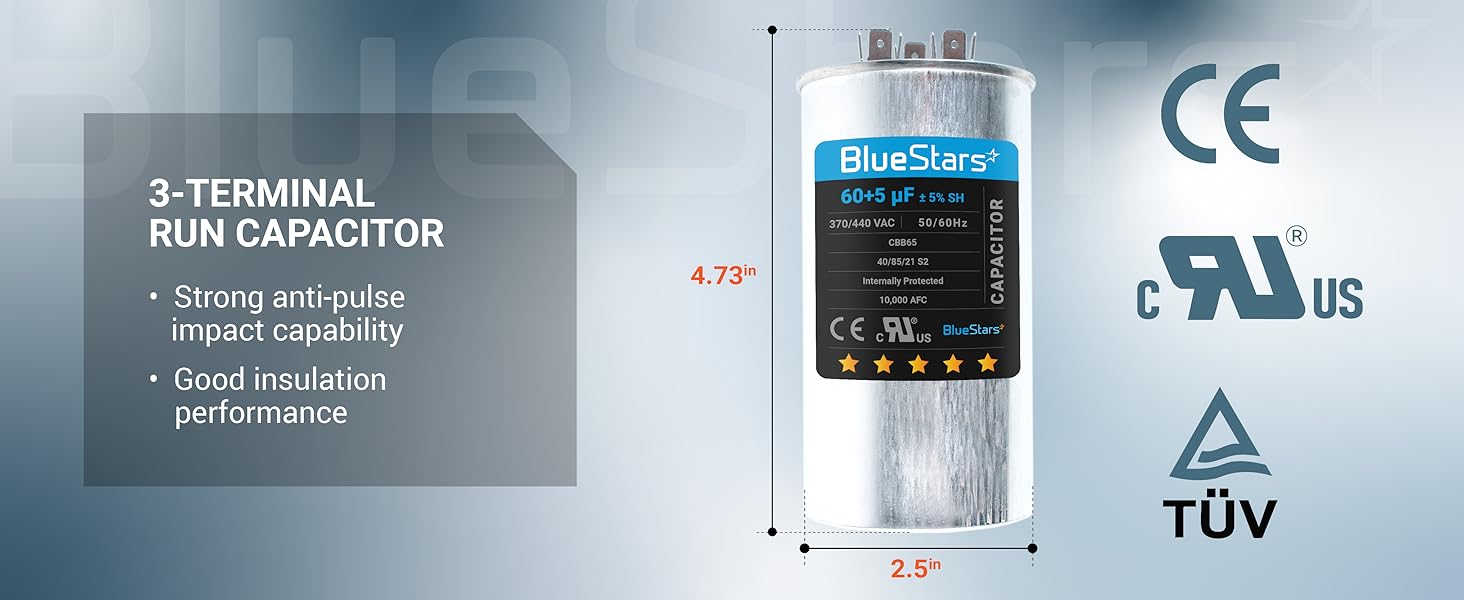
- Terminal Configuration: C (Common), HERM (Compressor), FAN
- Construction: Round aluminum case with steel cover
- Operating Temperature Range: -40°C to +70°C (-40°F to +158°F)
- Safety Standard: Meets EIA-456-A industry standards
- Operational Life: Rated for 60,000 hours of service
Replaces / Cross-Reference Part Numbers
- Carrier: P291-6054R, 318833-401, HC98JA061
- Goodman/Amana: CAP0600005440, C65-60/5R
- Rheem/Ruud: 43-25134-11
- Trane/American Standard: CPT00667
- Mars: 12266
- Packard: PRCFD605
- Grainger/Dayton: 2MDV8
Compatibility & Fitment
- Application: Designed for HVAC systems, including air conditioners and heat pumps, to power the compressor and fan motor.
- Voltage Compatibility: Replaces both 370 VAC and 440 VAC capacitors with a 60/5 MFD rating. A 440V capacitor can safely replace a 370V unit.
- Physical Dimensions: Verify case dimensions for proper fit. Common dimensions for this rating are approximately 2.5 inches in diameter.
When to Replace
- The outdoor unit's fan or compressor fails to start or struggles to run.
- A humming noise is heard from the unit without the fan or compressor engaging.
- The capacitor casing is visibly swollen, cracked, or leaking an oily substance.
- Capacitance measures outside the specified ±5% tolerance when tested with a multimeter.
Installation Tips
- Warning: Installation should be performed by a qualified technician. High voltage is present.
- Disconnect all electrical power to the unit at the breaker and service panel before beginning work.
- Safely discharge the existing capacitor by shorting the terminals with an insulated screwdriver or a high-wattage resistor.
- Document or photograph the wire connections to the C, HERM, and FAN terminals before removal.
- Secure the new capacitor in the mounting bracket and connect the wires to the corresponding terminals.

-

Step 1
Turn off the power and locate the capacitor -

Step 2
Discharge any stored electricity by shorting the terminals -

Step 3
Take a photo or note how the wires connect. Disconnect wires & install the new capacitor. -

Step 4
Reassemble and test