


Lifetime Warranty
[UL Certified] 30 uF MFD ±5% 370/440 VAC 50/60 Hz Multi-Purpose Motor Run Round Capacitor - For Air Conditioner, Heat Pump
Save 25%
0.00
Regular price
$19.00
Regular price
$25.33
Sale price
$19.00
Fast delivery
CONFIRM THE FIT FOR YOUR MODEL
Enter your model number
30 uF/MFD ± 5% 370 or 440 VAC Motor Run Round Capacitor
Key Features
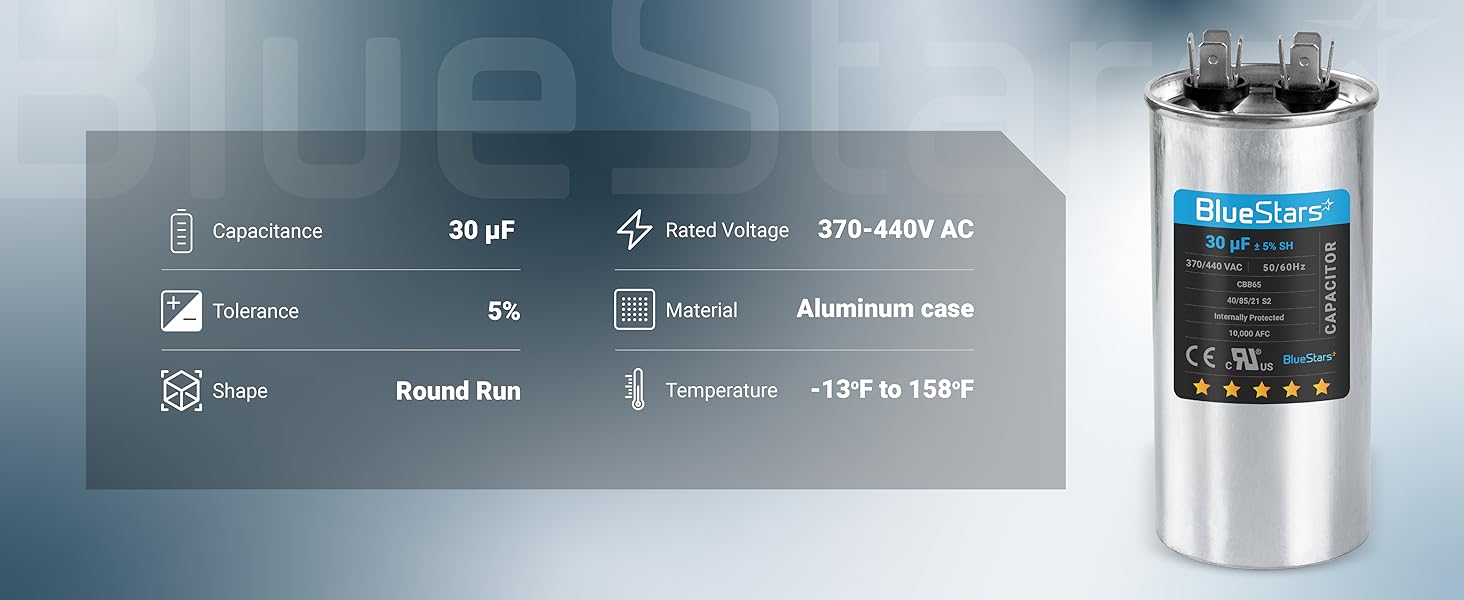
- Capacitance Rating: 30 Microfarad (uF/MFD)
- Tolerance: ± 5%
- Voltage: Dual voltage rated for 370 VAC or 440 VAC applications
- Frequency: 50/60 Hz
- Case: Round aluminum case with steel cover
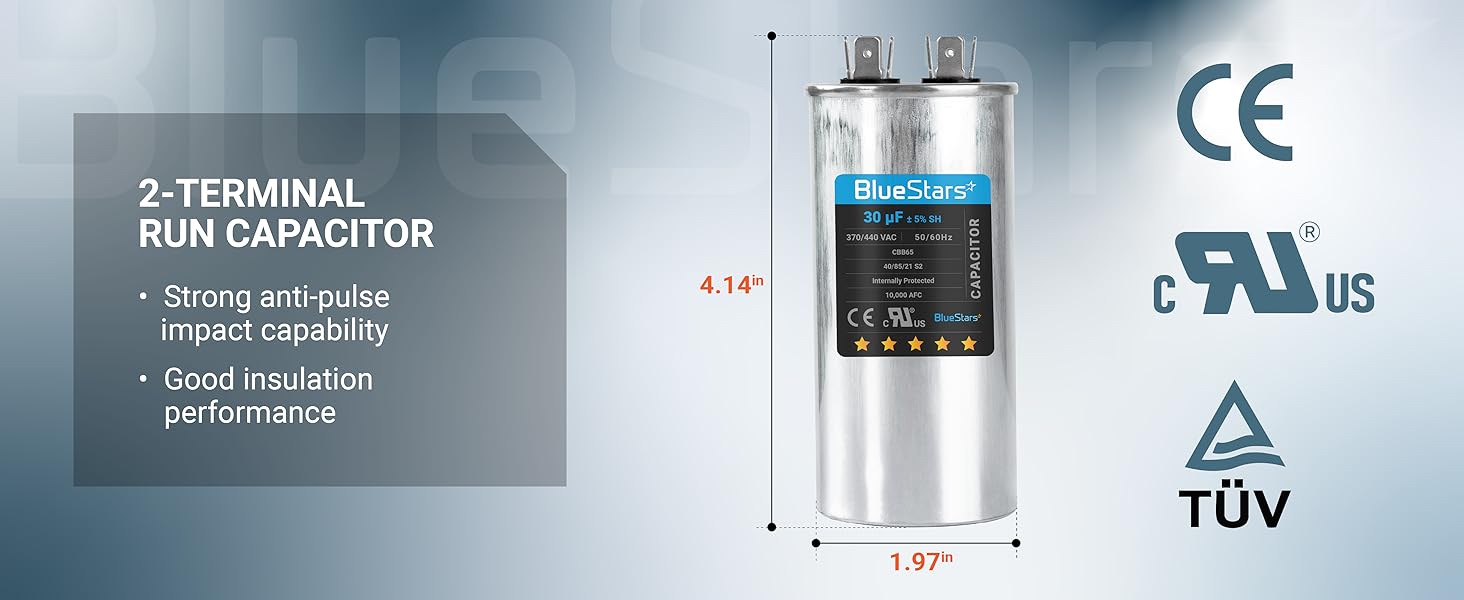
- Terminals: 1/4 inch male quick-connect terminals
- Safety: Pressure-sensitive interrupter mechanism
- Operating Temperature: -40° C to 70° C
Replaces / Cross-Reference Part Numbers
- This capacitor replaces any round, single-capacitance 30 uF capacitor with a voltage rating of either 370V or 440V.
- Always match the microfarad (uF/MFD) rating.
- The replacement capacitor's voltage rating must be equal to or greater than the original capacitor.
Compatibility & Fitment
- Commonly used for HVAC systems, air conditioner compressors, heat pumps, fan motors, and other electric motor applications.
- The round shape and standard terminal configuration allow for wide compatibility with units from multiple manufacturers.
- Verify physical dimensions (diameter and height) to ensure a proper fit within the existing mounting bracket and space.
When to Replace
- The motor hums but fails to start or struggles to start.
- The fan or compressor runs intermittently or at a reduced speed.
- The top of the existing capacitor is swollen or bulging.
- Fluid is leaking from the capacitor casing.
- A multimeter test shows the capacitance is outside the specified tolerance range.
Installation Tips
- Disconnect all electrical power to the equipment before beginning work.
- Safely discharge the old capacitor by shorting the terminals with an insulated-handle screwdriver.
- Note the wire placement on the old capacitor terminals before disconnecting. Taking a picture is recommended.
- Connect the wires to the corresponding terminals on the new capacitor.
- Secure the new capacitor with the original mounting strap or bracket.



-

Step 1
Turn off the power and locate the capacitor -

Step 2
Discharge any stored electricity by shorting the terminals -

Step 3
Take a photo or note how the wires connect. Disconnect wires & install the new capacitor. -

Step 4
Reassemble and test