


Lifetime Warranty
60+10 uF MFD ±5% 370/440 VAC CBB65 Dual Run Circular Start Capacitor - Fits AC Motor Run, Fan Start, Condenser
Save 25%
0.00
Regular price
$27.07
Regular price
$36.09
Sale price
$27.07
Fast delivery
CONFIRM THE FIT FOR YOUR MODEL
Enter your model number
60+10 uF 60/10 MFD ±5% 370V/440 VAC Volts CBB65 Dual Run Circular Start Capacitor
Key Features
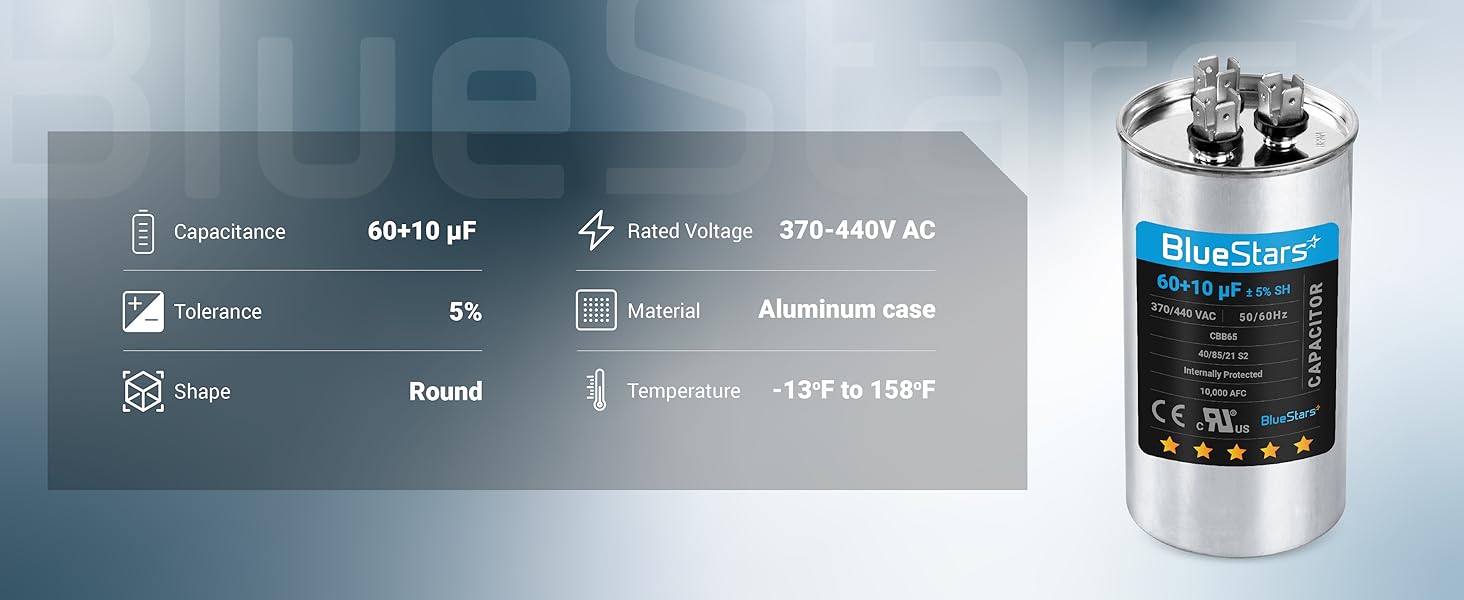
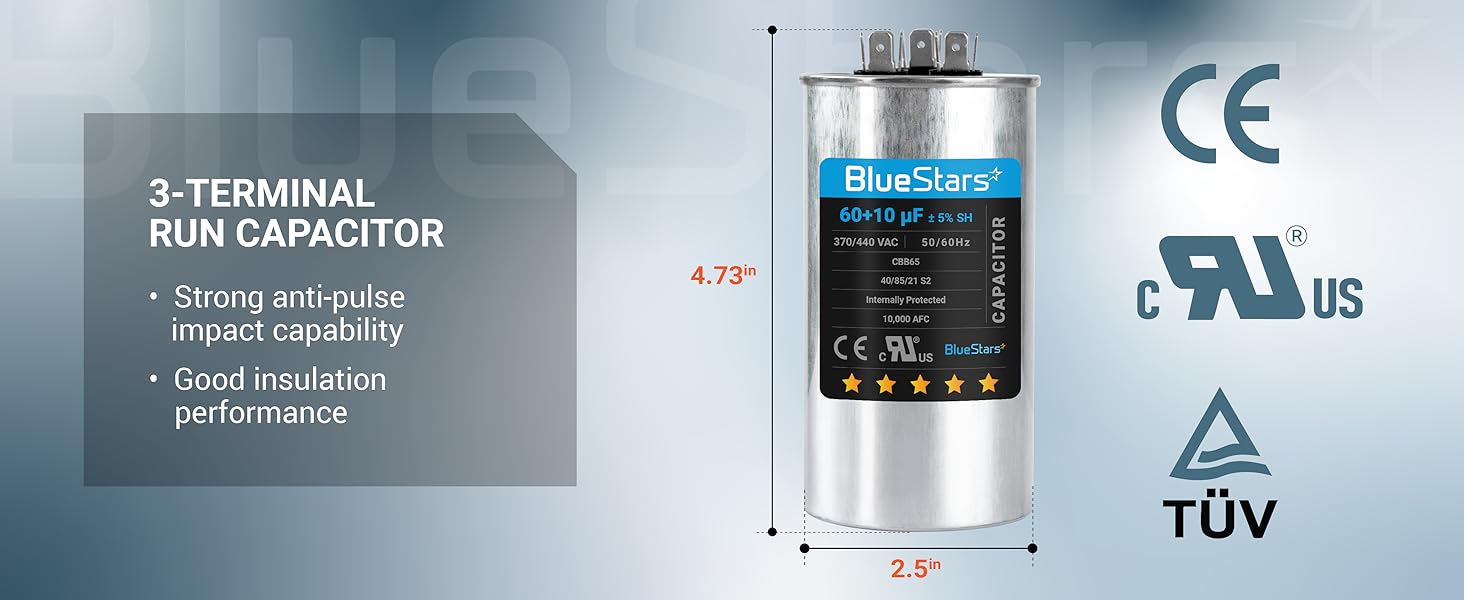
- Capacitance: 60 + 10 Microfarad (MFD)
- Voltage Rating: 370V / 440V AC
- Tolerance: ±5%
- Frequency: 50 / 60 Hz
- Shape: Round
- Case Material: Aluminum, oil-filled
- Terminals: 3-terminal (C, HERM, FAN) with 1/4 inch male quick-connects
- Operating Temperature Range: -40 °C to +70 °C
- Safety Standard: Meets EIA-456-A requirements
Replaces / Cross-Reference Part Numbers
- Replaces any dual round motor run capacitor with matching 60/10 MFD and 370 VAC or 440 VAC specifications.
- Direct replacement for capacitors from brands including Titan, Supco, and Packard.
- Commonly replaces parts with numbers such as P291-6014R, CBB65, and USA2236.
Compatibility & Fitment
- Designed for HVAC applications including air conditioners, heat pumps, and condensing units.
- Powers two electric motors, such as a compressor motor (HERM) and a fan motor (FAN).
- Fits units from major manufacturers such as Trane, Carrier, Goodman, Lennox, Rheem, and others that specify a 60/10 MFD capacitor.
When to Replace
- Compressor or fan motor hums but fails to start.
- Motor starts and runs intermittently or with low power.
- Visible bulging, swelling, or fluid leakage from the capacitor case.
- Capacitance measures outside the ±5% tolerance when tested with a multimeter.
Installation Tips
- Disconnect all electrical power to the equipment before servicing.
- Safely discharge the old capacitor using a resistor or an insulated tool across the terminals.
- Verify the MFD (uf) and voltage ratings of the old capacitor. The MFD rating must match exactly. The voltage rating of the replacement must be equal to or greater than the original.
- Note the wire placement on the old capacitor terminals (C, HERM, FAN) before disconnecting.
- Ensure the new capacitor is secured with the original mounting strap or bracket.



-

Step 1
Turn off the power and locate the capacitor -

Step 2
Discharge any stored electricity by shorting the terminals -

Step 3
Take a photo or note how the wires connect. Disconnect wires & install the new capacitor. -

Step 4
Reassemble and test