


Lifetime Warranty
30+5 uF MFD 370/440 VAC Round Dual Run Capacitor CBB65 CBB65B - Fits AC Motor Run, Fan Start, Condenser
Save 13%
0.00
Regular price
$26.68
Regular price
$30.68
Sale price
$26.68
Fast delivery
CONFIRM THE FIT FOR YOUR MODEL
Enter your model number
30+5 MFD 30/5 uF 370-440 Volt Volts Round Dual Run Capacitor
Key Features
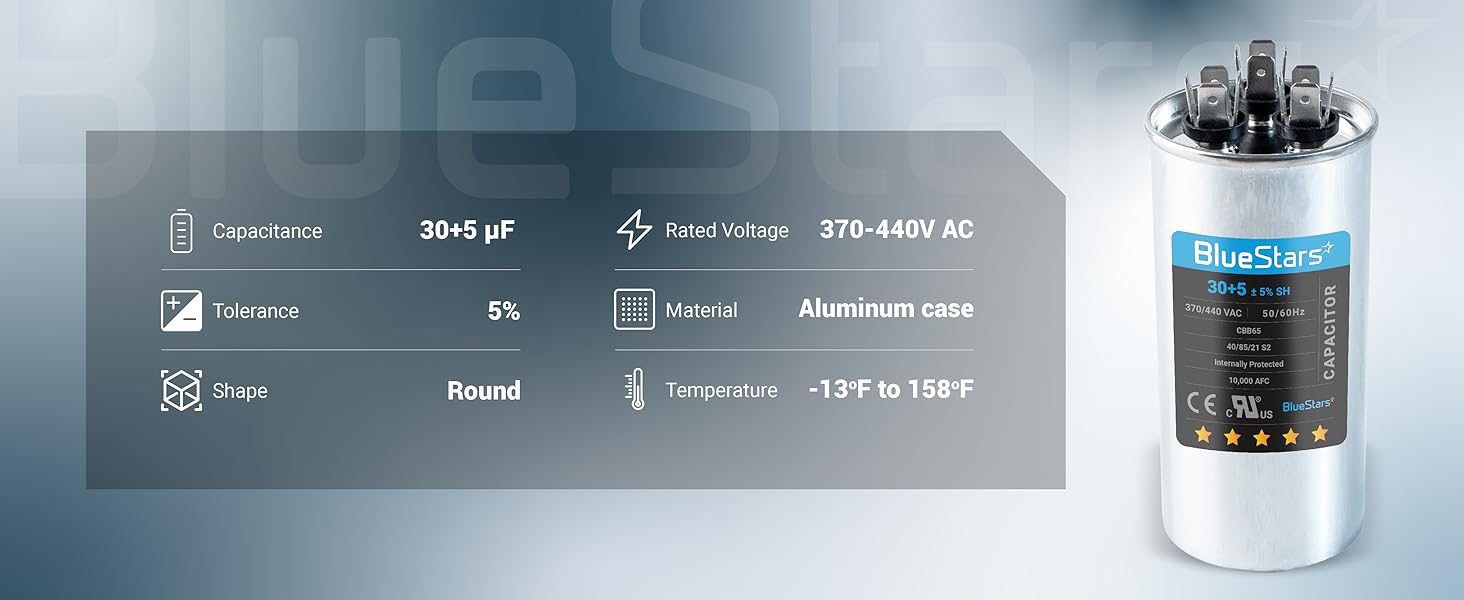
- Capacitance: 30 + 5 Microfarad (uF/MFD)
- Voltage Rating: 370 or 440 VAC
- Frequency: 50/60 Hz
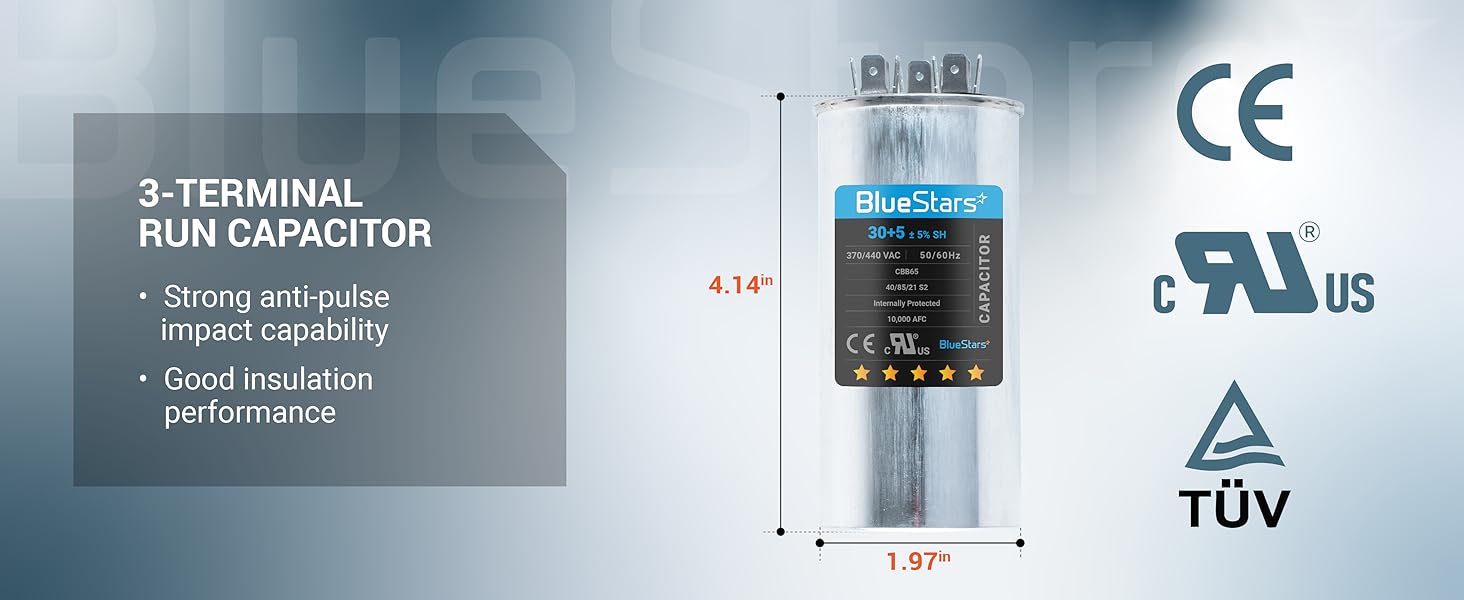
- Design: Dual run capacitor for two electric motors (compressor and fan)
- Case Shape: Round
- Terminals: 3 (Common, Fan, Hermetic Compressor)
- Capacitance Tolerance: +/- 5%
- Standard Type: CBB65
Replaces / Cross-Reference Part Numbers
- Replaces any round dual run capacitor with matching 30/5 MFD and 370V or 440V specifications.
- Amrad Engineering: USA2226
- Part Number: 331441
Compatibility & Fitment
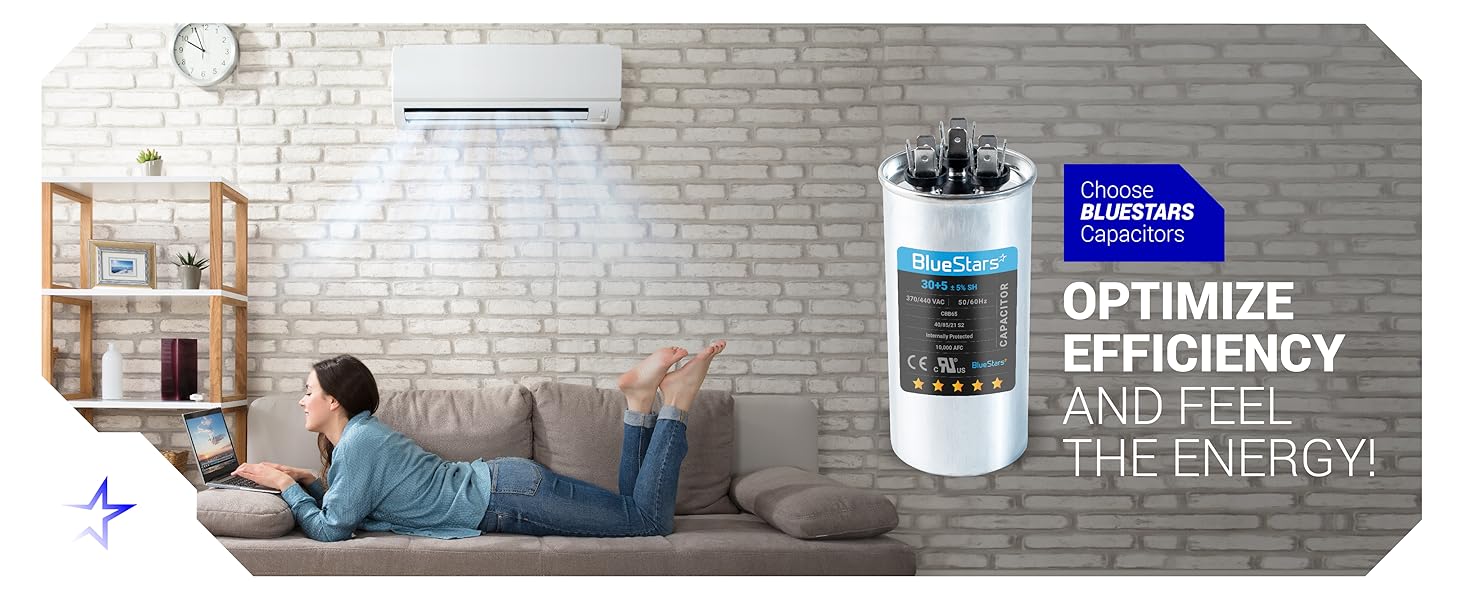
- For use in HVAC systems, central air conditioners, heat pumps, and condensing units.
- Powers both a compressor motor and a fan motor from a single component.
- To ensure fitment, verify that your system's required specifications match this capacitor's MFD rating (30/5), voltage (370V or 440V), and physical shape (round).
When to Replace
- Compressor or fan motor fails to start or experiences a hard start.
- A humming noise is heard from the unit, but the motor does not engage.
- The air conditioner unit is running but blows warm air.
- The capacitor case is physically swollen, bulging at the top, or leaking fluid.
Installation Tips
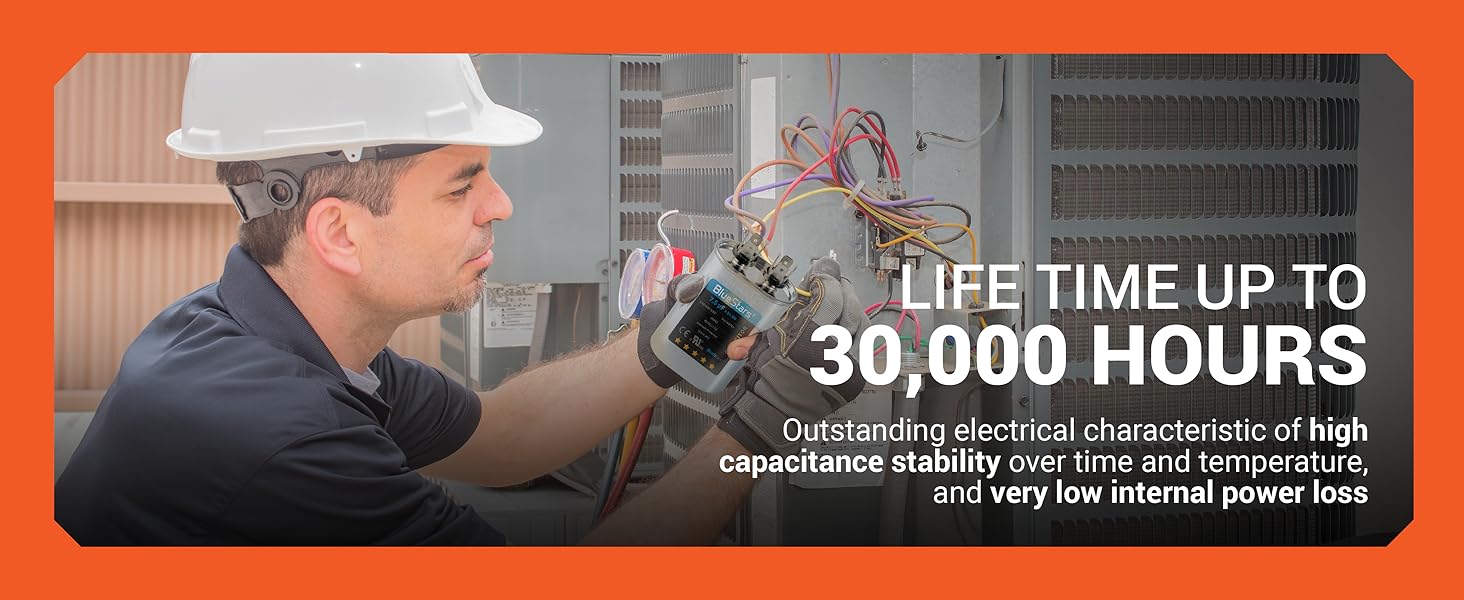
- Disconnect all electrical power to the HVAC unit before servicing.
- Safely discharge the existing capacitor to avoid risk of electric shock.
- Note the wire placement on the old capacitor's terminals (C, FAN, HERM) before disconnecting.
- Connect wires to the corresponding terminals on the new capacitor.
- Ensure the capacitor is securely mounted within the unit's housing.


-

Step 1
Turn off the power and locate the capacitor -

Step 2
Discharge any stored electricity by shorting the terminals -

Step 3
Take a photo or note how the wires connect. Disconnect wires & install the new capacitor. -

Step 4
Reassemble and test