

Choosing between a single stage vs two stage snow blower depends on your typical snowfall, driveway surface, and clearing needs. While single-stage models are compact and ideal for paved areas, two-stage machines handle tougher snow conditions and larger driveways. In this guide, BlueStars Parts compares their key differences to help you choose the right option.
Quick Answer: Single-Stage vs Two-Stage Snow Blower
A single-stage snow blower uses one rotating auger to collect and throw snow, making it ideal for smaller paved driveways. A two-stage snow blower uses an auger and a separate impeller to clear deeper, heavier snow across larger areas, including gravel surfaces when properly adjusted.
| Feature | Single-Stage Snow Blower | Two-Stage Snow Blower |
|---|---|---|
| Mechanism | One auger collects and throws snow | An auger collects snow, and an impeller throws it |
| Snow depth | Best for light snowfall, often around 6 inches | Handles deeper snow, depending on the model |
| Throw distance | Generally shorter, often around 15 - 30 feet | Generally longer, with some models reaching 30 - 50 feet |
| Ground contact | Rubber or plastic paddles contact the ground | Auger stays above the ground with adjustable skid shoes |
| Surface types | Smooth concrete and asphalt | Paved, gravel, and some uneven surfaces |
| Drive system | Usually pushed manually | Usually self-propelled |
| Weight and storage | Lightweight, compact, and easy to store | Heavier and requires more storage space |
| Plow berm | May struggle with dense, compacted snow | Better suited to breaking through heavy snowbanks |
1. What Is a Single-Stage Snow Blower?
A single-stage snow blower is a compact machine that uses one rotating auger to collect and throw snow in a single motion. It works best for smaller paved driveways, sidewalks, and light to moderate snowfall. Compared with most two-stage models, single-stage snow blowers are generally lighter, more affordable, and easier to store.
1.1. How Does a Single-Stage Snow Blower Work?
A single-stage snow blower uses one rotating auger to collect and discharge snow without a separate impeller. Here's how it works:
-
Collects snow: Rubber paddles scoop snow from the ground and direct it toward the discharge chute.
-
Throws snow: The rotating auger pushes snow through the chute in one continuous process.
-
Clears pavement: On conventional models, the paddles contact the ground to help clear snow close to the surface and assist forward movement.
This ground-contact design makes single-stage snow blowers effective on paved surfaces but generally unsuitable for loose gravel or heavy, compacted snow.

A single-stage snow blower uses its rotating auger to collect snow and throw it through the discharge chute in one continuous process (Source: BlueStars Parts)
1.2. What Are the Pros and Cons of a Single-Stage Snow Blower?
Single-stage snow blowers are a practical choice for homeowners with smaller paved areas, although their performance depends on snowfall conditions and machine size.
| Pros | Cons |
|---|---|
| Lightweight and compact: Easy to maneuver around cars and narrow walkways. | Limited heavy-snow performance: May struggle with deep drifts and compacted snowbanks. |
| More affordable: Generally costs less than a comparable two-stage model. | Not ideal for gravel: Ground-contact paddles can pick up and throw stones. |
| Clears close to pavement: Rubber paddles help remove snow from smooth surfaces. | Paddles wear over time: Requires regular inspection and replacement. |
| Easy to store: Takes up less space in garages and sheds. | Smaller clearing width: Can take longer to clear large driveways. |
1.3. How Do You Maintain a Single-Stage Snow Blower?
Regular single-stage snow blower maintenance focuses on the rubber paddles, scraper bar, and drive components, which can wear down during operation.
-
Inspect rubber paddles: Check for cracks, uneven wear, or worn-out indicators. Damaged snow blower rubber paddles can reduce snow collection and throwing performance.
-
Check the scraper bar: Look for excessive wear along the bottom edge, especially if the machine starts leaving snow behind.
-
Inspect belts and moving parts: Check for wear, damage, or loose components according to your owner's manual.
If your snow blower's rubber paddles are cracked, worn, or no longer collecting snow effectively, replacing them can help restore clearing performance. The 753-04472 / 735-04033 Rubber Paddle Set from BlueStars Parts is designed for select MTD-built single-stage snow blowers, helping the auger collect and move snow efficiently. Before ordering, check your snow blower's model number and original part number to confirm compatibility.
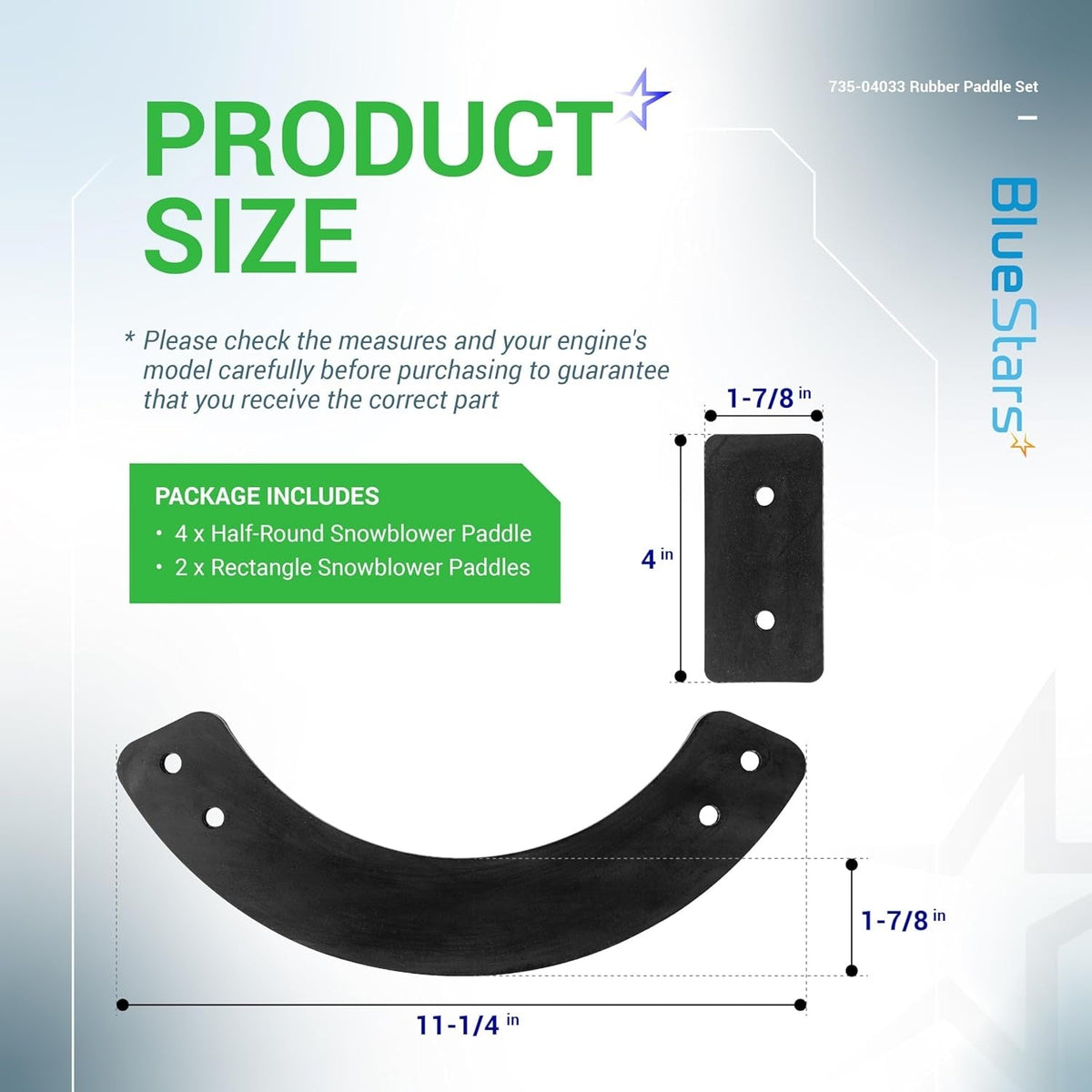
753-04472 735-04033 Rubber Paddle Set
2. How Does a Two-Stage Snow Blower Work?
A two-stage snow blower uses an auger and a separate impeller to collect and discharge snow. This design makes it suitable for deeper snowfall, heavy snowbanks, and larger driveways. Most two-stage models are self-propelled and can be used on gravel surfaces when their skid shoes are properly adjusted.
2.1. How Does a Two-Stage Snow Blower Work?
A two-stage snow blower moves snow through two separate mechanisms:
-
Stage 1 - Auger: The two-stage snow blower auger breaks up snow and moves it toward the center of the machine.
-
Stage 2 - Impeller: A high-speed impeller throws the collected snow through the discharge chute, helping it travel farther.
Unlike conventional single-stage models, adjustable skid shoes keep the auger housing above the ground. This design helps two-stage snow blowers clear deeper snow and operate on gravel or uneven surfaces when properly adjusted.

A two-stage snow blower uses an auger to gather snow and a separate impeller to force it through the chute, helping clear deeper accumulations (Source: BlueStars Parts)
2.2. What Are the Pros and Cons of a Two-Stage Snow Blower?
Two-stage snow blowers offer stronger snow-clearing performance for demanding winter conditions, but their larger design comes with higher costs and maintenance needs.
| Pros | Cons |
|---|---|
| Handles deeper snow: Suitable for heavy snowfall and large snowdrifts within the model's capacity. | Higher purchase cost: Generally more expensive than single-stage models. |
| Moves heavy snow efficiently: The separate impeller helps discharge wet and dense snow. | Heavier construction: Can be harder to maneuver in tight spaces. |
| Works on more surfaces: Adjustable skid shoes help accommodate gravel and uneven ground. | Requires more storage space: Its larger size may not suit small garages or sheds. |
| Self-propelled operation: Driven wheels or tracks reduce pushing effort. | More components to maintain: The auger, impeller, drive system, and other parts need regular inspection. |
| Longer throwing distance: Helps clear wide driveways and move snow away from paths. | May leave a thin layer of snow: The auger generally stays above the ground. |
2.3. How Do You Maintain a Two-Stage Snow Blower?
Proper two-stage snow blower maintenance involves checking the auger system, skid shoes, scraper bar, and drive components to maintain reliable performance.
-
Inspect shear pins: On models equipped with them, snow blower shear pins are designed to break when the auger hits an obstruction, protecting the drive system. Replace broken pins with manufacturer-specified parts, never ordinary bolts.
-
Check skid shoes and scraper bar: Inspect for uneven wear and adjust ground clearance based on your driveway surface.
-
Inspect the auger, impeller, and belts: Look for visible damage, loose parts, or excessive wear before operating the machine.
If a two-stage snow blower's auger stops turning after hitting an obstruction, a broken shear pin may be the cause. The 303160355P / 303160355 Shear Pins and Nuts from BlueStars Parts are replacement fasteners for compatible PowerSmart snow blowers, designed to break under excessive load and help protect the auger drive system. Always verify your machine's model and original shear pin specifications before purchasing.
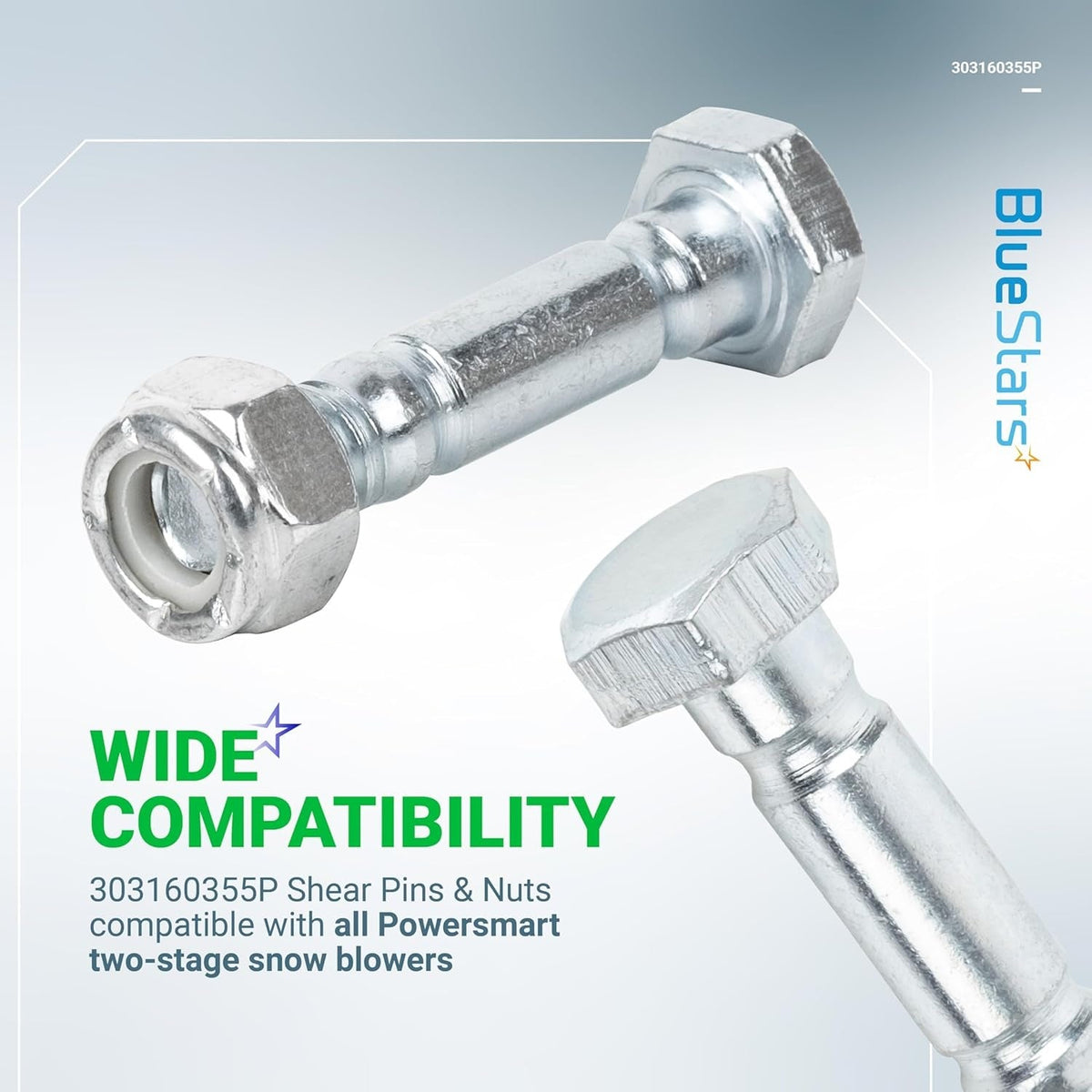
303160355P/303160355 Shear Pins and Nuts (Source: BlueStars Parts)
3. Single-Stage vs Two-Stage Snow Blower: Key Differences Explained
The main difference between single stage and two stage snow blower models is their snow-clearing capacity, surface compatibility, and ease of use. Understanding these five differences will help you choose the right machine for your driveway and winter conditions.
3.1. Snow Depth and Snow Type
A single-stage snow blower is generally best for light to moderate snowfall. Some newer models can handle deeper snow, but heavy, wet, or compacted snow may reduce their clearing efficiency.
A two-stage snow blower is better suited for deep snow, dense snowbanks, and frequent winter storms. Its separate impeller helps move larger amounts of snow more effectively.
Recommendation: Choose a two-stage model for frequent heavy snowfall. For either type, check the manufacturer's recommended snow depth and intake capacity before purchasing.
3.2. Throw Distance
Single-stage snow blowers generally throw snow shorter distances because one auger handles both collection and discharge. However, some high-performance models can throw snow up to 40 feet.
Two-stage machines use a separate impeller to throw snow farther, with some heavy-duty models reaching up to 60 feet. Actual distance depends on the machine, snow conditions, and chute settings.
Recommendation: For wide driveways, prioritize sufficient throwing distance to move snow away from cleared areas. If your snow blower is not throwing snow as expected, check for worn paddles, slipping belts, or chute blockages before assuming the machine lacks power.

A two-stage snow blower can generally throw snow farther than a single-stage model, making it useful for wider driveways and heavier snowfall (Source: BlueStars Parts)
3.3. Surface Type: Paved vs Gravel and Dirt
Single-stage snow blowers with ground-contact paddles work best on smooth concrete or asphalt. On loose gravel, the paddles can pick up stones and throw them through the chute, creating a safety risk.
Two-stage snow blowers use adjustable skid shoes to maintain clearance between the auger housing and the ground. This makes them more suitable for gravel and some uneven surfaces when properly adjusted.
Recommendation: Choose a conventional single-stage model for smooth pavement and a two-stage model for gravel driveways. Always follow the manufacturer's surface and skid shoe adjustment guidelines.
3.4. Slopes, Size, and Maneuverability
Single-stage snow blowers are generally lighter and easier to turn around parked cars, narrow walkways, and tight corners. Their compact size also makes them easier to store, although clearing large areas may require more passes.
Two-stage snow blowers are heavier but typically include self-propelled wheels or tracks. This can reduce pushing effort on long driveways, while traction and handling on slopes depend on the specific model.
Recommendation: Choose a single-stage model for smaller spaces and easier maneuverability. For large or sloped driveways, consider a self-propelled two-stage model with suitable traction and follow the manufacturer's slope-safety limits.

A lighter single-stage snow blower is easier to maneuver in tight spaces compared with a larger two-stage model (Source: BlueStars Parts)
3.5. Clearing Down to the Pavement
Conventional single-stage snow blowers use rubber paddles that contact the pavement, helping remove snow close to the surface. This is particularly useful for smooth concrete driveways and sidewalks.
Two-stage snow blowers typically maintain ground clearance through adjustable skid shoes. While this helps protect the machine and reduces the risk of collecting gravel, it may leave a thin layer of snow behind.
Recommendation: Choose a single-stage model if clearing snow close to smooth pavement is your priority. Choose a two-stage model when deeper snow, uneven surfaces, or gravel compatibility matters more.
4. Single-Stage vs. Two-Stage Snow Blower: Which Should You Choose?
Choosing the right snow blower depends on your driveway size, surface type, typical snowfall, and budget. A single-stage model is usually enough for smaller paved areas, while a two-stage machine is better suited for demanding winter conditions.
When Should You Choose a Single-Stage Snow Blower?
A single-stage snow blower is a practical choice for homeowners who need convenient snow removal without a large, heavy machine. Consider this option if:
-
You have a small or medium-sized paved driveway: Its compact design makes clearing sidewalks and narrow spaces easier.
-
You experience light to moderate snowfall: It works well for routine snow removal without frequent deep drifts.
-
You prefer easy handling and storage: A lighter machine is easier to maneuver and takes up less garage space.
-
You have a limited budget: Single-stage models are generally more affordable and have fewer components to maintain.
Best for: Homeowners with paved driveways, limited storage, and relatively manageable winter snowfall.
When Should You Choose a Two-Stage Snow Blower?
A two-stage snow blower is better suited for homeowners who regularly deal with heavy snowfall or larger clearing areas. Consider this option if:
-
You frequently experience deep or wet snow: Its auger and impeller system handles dense accumulations more effectively.
-
You have a large or long driveway: Wider clearing paths and self-propelled operation can reduce clearing time and effort.
-
Your driveway has gravel or uneven surfaces: Adjustable skid shoes help maintain clearance and reduce the risk of picking up stones.
-
You regularly face compacted snowbanks: The stronger snow-clearing system is generally better suited for plow-packed snow.
Best for: Homeowners with larger properties, gravel driveways, or frequent heavy winter storms.
5. How to Maintain Your Snow Blower for Reliable Performance
Regular snow blower maintenance helps prevent unexpected breakdowns, extend component life, and keep your machine ready for winter. Whether you use a single-stage or two-stage model, follow these essential tips:
-
Inspect moving parts: Check the auger, belts, paddles, and drive components for wear or damage. Replace worn parts according to your owner's manual.
-
Keep the discharge chute clear: Turn off the engine, wait for all moving parts to stop, and use the recommended clean-out tool to remove blockages. Never use your hands.
-
Maintain the fuel and ignition system: For gas-powered models, follow the manufacturer's fuel, oil, and spark plug maintenance guidelines. If your snow blower runs rough, check for possible fuel or ignition problems.
-
Check the starting system: Inspect the starter rope and battery or electric-start connections, if equipped. If your snow blower won't start, troubleshoot the starting system before replacing parts.
-
Clean and store properly: Remove accumulated snow after use, allow the machine to dry, and follow the manufacturer's off-season storage instructions.
For maintenance and repairs, explore Snow Blower Parts at BlueStars Parts, including Snow Blower Fuel-Ignition Parts for compatible fuel and starting-system components. Always verify your snow blower's model and original part number before ordering.
By following a regular maintenance routine, you can help reduce wear, maintain clearing performance, and keep your snow blower ready for changing winter conditions.

Regularly checking the auger, inspecting the machine, and following seasonal maintenance recommendations helps keep a snow blower ready for winter (Source: BlueStars Parts)
6. FAQ: Single Stage vs Two Stage Snow Blower
6.1. How Do I Know If My Snow Blower Is Single-Stage or Two-Stage?
Check how the machine collects and discharges snow. A single-stage snow blower uses one auger to collect and throw snow directly through the chute. A two-stage model has a separate impeller that throws the snow after the auger collects it. You can also check the model number and owner's manual to confirm the design.
6.2. Can I Use a Single-Stage Snow Blower on a Gravel Driveway?
A standard single-stage snow blower is generally not suitable for loose gravel because its auger contacts the ground and may pick up and throw stones. A two-stage model with properly adjusted skid shoes is usually a better choice for gravel driveways. Always follow the manufacturer's instructions for setup and operation.
6.3. How Much Snow Can a Single-Stage Snow Blower Actually Handle?
Many single-stage snow blowers work best with light snowfall of around 6 inches, although the actual capacity depends on the model. Some machines can handle more snow under suitable conditions, but deep, wet, or compacted snow can reduce performance. Check the manufacturer's recommended clearing depth before use.
6.4. Why Does a Two-Stage Snow Blower Leave a Thin Layer of Snow Behind?
A two-stage snow blower usually keeps its auger above the ground to protect the machine and prevent it from collecting gravel or debris. This clearance can leave a thin layer of snow behind, particularly on uneven surfaces. You may be able to improve clearing performance by adjusting the skid shoes according to the owner's manual.
6.5. Is a Two-Stage Snow Blower Worth It for a Small Driveway?
A two-stage snow blower can be worth the investment if your small driveway regularly receives deep snow, has a gravel surface, or develops dense snowbanks after road plowing. However, a single-stage model may be more affordable, easier to store, and sufficient for a small paved driveway with light snowfall. Consider your typical winter conditions before choosing between the two.
Choosing between a single-stage and two-stage snow blower depends on your typical snowfall, driveway size, and surface type. Single-stage models are ideal for smaller paved areas, while two-stage machines offer better performance in heavy snow and on larger or gravel driveways. Whichever you choose, keep your equipment working reliably throughout winter with compatible replacement parts from BlueStars Parts.
Contact information
8 The Green, Ste A, Dover, Delaware 19901-3618, United States
Website: https://bluestarspartstrend.com/
References
Single Stage Snow Blowers | Toro | Toro. (n.d.). https://www.toro.com/en/homeowner/snow-blowers/single-stage-snow
2 Stage Snow Blowers | Toro | Toro. (n.d.). https://www.toro.com/en/homeowner/snow-blowers/two-stage-snow
Read More Related Articles


